

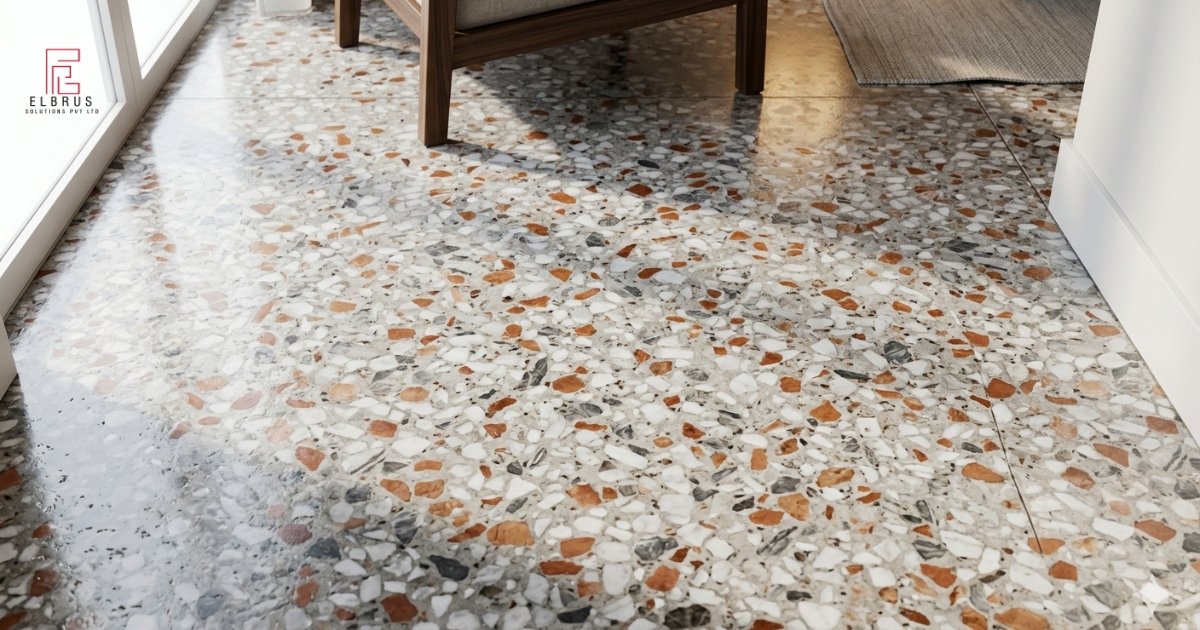
Terrazzo flooring is a high-performance composite surface made by embedding chips of marble, granite, quartz, glass, or recycled materials into a cement or epoxy resin binder. Once set, the surface is ground smooth and polished to a reflective sheen — creating one of the most visually unique and durable floor finishes available for modern homes.
Originally developed in 15th-century Venice, where Venetian workers used leftover marble chips to create affordable flooring, terrazzo has evolved into a premium interior design choice. Today, terrazzo flooring design is one of the fastest-growing trends in residential and commercial spaces, driven by its durability, sustainability, and near-limitless customisation potential.
5 Types of Terrazzo Flooring — Which One is Right for You?
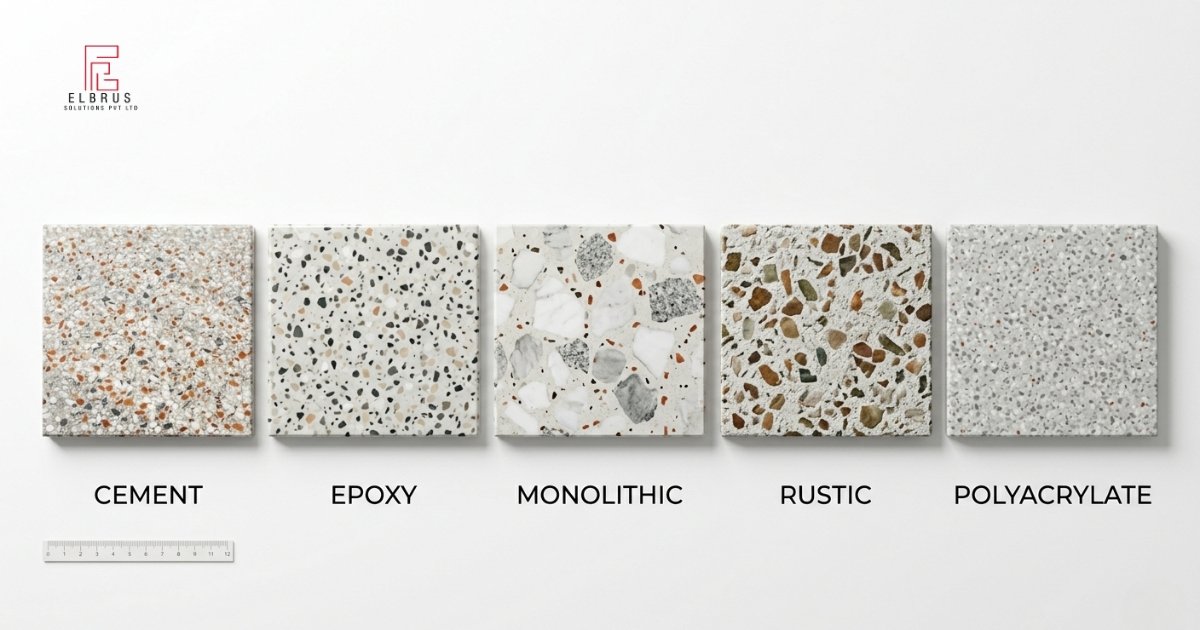
Not all terrazzo is the same. The type you choose significantly affects terrazzo flooring cost, durability, and suitability for your space. Here is a complete breakdown of every terrazzo flooring type available in 2026.
1. Cement-Based Terrazzo
The original form of terrazzo. Heavy, extremely durable, and ideal for outdoor patios and heritage restorations. Requires a moisture barrier in humid climates.
2. Epoxy Terrazzo
The modern standard for indoor spaces. Epoxy terrazzo flooring is thinner, lighter, and offers the widest range of vibrant custom colours — perfect for kitchens and bathrooms.
3. Monolithic Terrazzo
Installed directly over a concrete slab without a sand cushion layer. Best for high-traffic commercial and residential spaces where strength and seamlessness are essential.
4. Rustic Terrazzo
Features a textured, unpolished surface that is naturally anti-slip. The best choice for garden paths, outdoor terraces, and pool surrounds.
5. Polyacrylate Terrazzo
A specialist formulation engineered for extreme weather and chemical exposure. Used in industrial settings but increasingly adopted for premium residential outdoor areas.
7 Key Benefits of Terrazzo Flooring for Modern Homes
-
Extremely Low Maintenance: A regular sweep and pH-neutral mop is all that is required. There are no grout lines to scrub, no wax required, and no periodic refinishing like wood floors demand.
Advantages and Disadvantages of Terrazzo Flooring
Before investing, it is essential to understand both sides. Here is an honest evaluation of terrazzo flooring pros and cons.
Advantages
- Lifespan of 40–100 years
- Low ongoing maintenance cost
- Eco-friendly & recyclable materials
- Custom colour & pattern options
- Non-porous & hygienic surface
- Increases property resale value
Disadvantages
- Higher upfront installation cost
- Hard and cold underfoot
- Can be slippery when wet
- Requires skilled installation
- Resealing is needed every 2–5 years
- Cracks possible over settling
Terrazzo Flooring Cost in India 2026 — Complete Price Breakdown
One of the most searched questions is: “How much does terrazzo flooring cost in India?” The answer depends on the type, design complexity, and local labour rates. The table below provides realistic 2026 estimates.
| Type | India Cost (per sq ft) | Global Avg (per sq ft) | Best For |
|---|---|---|---|
| Cement Terrazzo Tiles | ₹150 – ₹350 | $15 – $35 | Outdoors, heritage style |
| Epoxy Terrazzo (Poured) | ₹300 – ₹700 | $20 – $70 | Modern interiors, kitchens |
| Monolithic Terrazzo | ₹250 – ₹550 | $25 – $60 | High-traffic floors |
| Rustic / Anti-Slip | ₹120 – ₹280 | $12 – $30 | Gardens, pool areas |
| Average Full-Room Project | ₹40,000 – ₹1,00,000 | $4,000 – $10,000 | Complete room installation |
What Affects Terrazzo Flooring Price?
The final cost of any terrazzo flooring project is influenced by the quality of aggregate materials (imported marble chips versus local stone), the complexity of the design (simple uniform colour versus custom geometric patterns), the thickness of the pour, the surface area, and local labour rates. In Tier-1 Indian cities, labour costs are typically 20–35% of the total project cost.
Terrazzo Flooring Installation Process — Step by Step
Professional installation is non-negotiable for a quality terrazzo floor. Here is the standard terrazzo floor installation process used by skilled contractors.
1. Surface Preparation
The subfloor is cleaned, levelled, and checked for moisture. Any cracks or imperfections are repaired before work begins.
2. Divider Strip Placement
Metal or plastic divider strips are installed to define pattern zones, prevent cracking, and create the iconic geometric outlines terrazzo is known for.
3. Aggregate Mixing
Marble chips, glass, or other aggregates are measured and blended with the cement or epoxy binder. Pigments are added at this stage for custom colours.
4. Pouring or Tile Laying
The mix is poured and spread evenly across the prepared subfloor, filling each section between the divider strips.
5. Curing Period
The terrazzo is allowed to cure fully — typically 24–72 hours for epoxy, longer for cement-based systems — before any grinding begins.
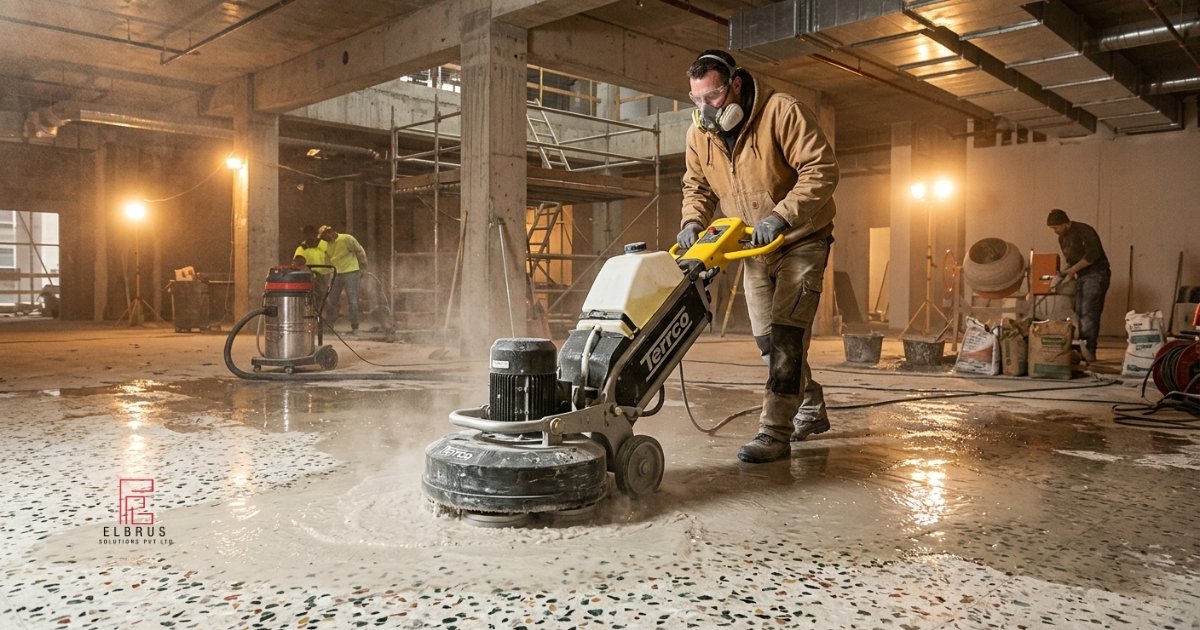
6. Grinding & Polishing
Industrial grinding machines progressively refine the surface, starting with coarse grits and finishing with ultra-fine diamond pads to achieve the mirror-like sheen.
7. Sealing
A penetrating sealer is applied to protect the surface from stains, moisture, and daily wear. This step is critical for longevity and must be repeated every 2–5 years.
How to Clean and Maintain Terrazzo Flooring
Proper maintenance keeps terrazzo flooring looking new for decades. Follow these terrazzo floor cleaning tips to protect your investment.
- Clean spills immediately: Although sealed terrazzo is non-porous, red wine, turmeric, and oil can stain unsealed or worn areas if left overnight.
Terrazzo vs Marble vs Tiles vs Hardwood — Which Flooring Wins?
How does terrazzo flooring compare to marble, ceramic tiles, and hardwood? This comprehensive comparison helps you make the right decision for your home.
| Feature | Terrazzo | Marble | Ceramic Tiles | Hardwood |
|---|---|---|---|---|
| Lifespan | 40–100 years | 25–50 years | 15–20 years | 20–40 years |
| Maintenance | Very Low | Medium | Low | High |
| Eco-Friendly | High | Medium | Low | Medium |
| Design Options | Unlimited | Limited | Moderate | Limited |
| Cost (India) | High | High | Affordable | Medium–High |
| Comfort Underfoot | Hard | Hard | Hard | Warm & Soft |
| Water Resistance | Excellent | Poor | Good | Poor |
Terrazzo Flooring — Frequently Asked Questions
1. Is terrazzo flooring good for Indian homes?
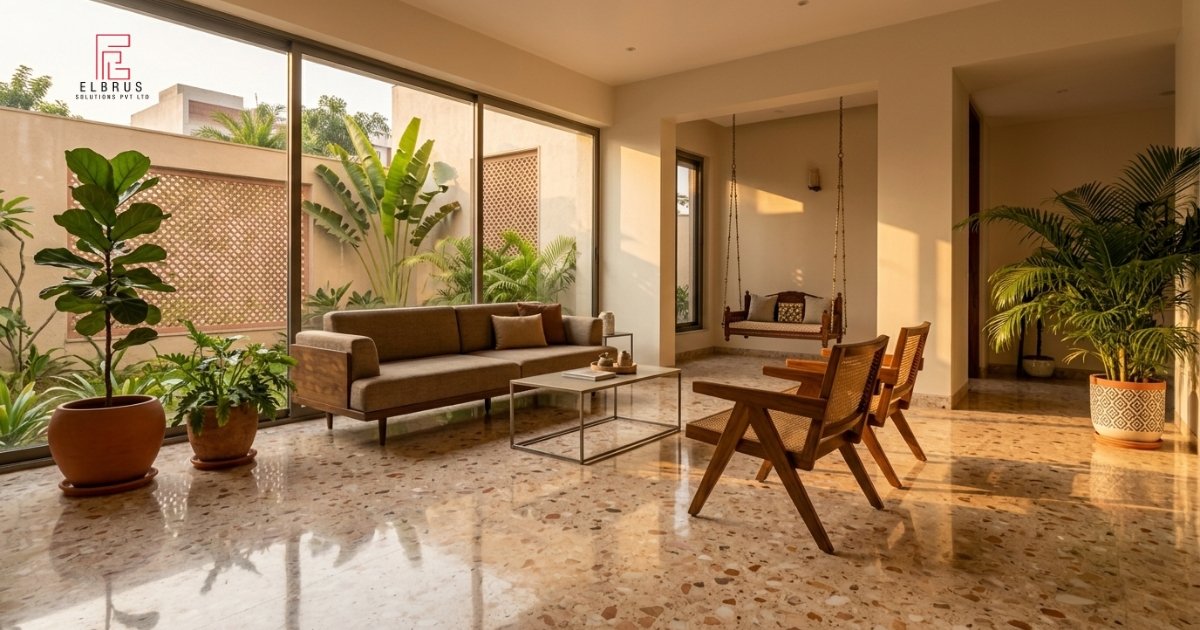
Yes. Terrazzo flooring is particularly well-suited to Indian climates. Its heat-resistant, non-porous surface stays cool in summer, handles high humidity well, and is easy to clean in dusty environments. It is one of the most practical premium flooring options for homes across India.
2. How long does terrazzo flooring last?
With proper sealing and maintenance, terrazzo flooring typically lasts over 100 years. Many public buildings in Europe still have original terrazzo floors over 100 years old that remain in excellent condition.
3. What is the cost of terrazzo flooring per square foot in India?
In India, terrazzo flooring typically costs ₹120 to ₹700 per square foot, depending on the type (cement tile vs. poured epoxy), design complexity, and local labour rates. A full-room installation usually costs between ₹40,000 and ₹1,00,000.
4. Can terrazzo flooring be installed in bathrooms?
Yes, epoxy terrazzo is an excellent choice for bathrooms. It is completely waterproof when properly sealed, non-porous, and resistant to mould and mildew. However, a matte or textured finish is recommended in wet areas to reduce slip risk.
5. What is the difference between epoxy terrazzo and cement terrazzo?
Epoxy terrazzo uses synthetic resin as its binder and is thinner, lighter, and better suited for indoor use with vibrant colour options. Cement terrazzo uses Portland cement as the binder, making it heavier, more traditional, and more appropriate for outdoor or heavily trafficked areas. Epoxy terrazzo is generally more expensive but more versatile for modern interiors.
Conclusion: Is Terrazzo Flooring Worth It in 2026?
Terrazzo flooring remains one of the most compelling premium flooring choices available to Indian homeowners in 2026. Its extraordinary lifespan, minimal upkeep requirements, eco-friendly composition, and unique design potential set it apart from every other flooring material in its category.
The higher upfront cost is the primary barrier — but when amortised over a 50-year lifespan, terrazzo flooring becomes more cost-effective than marble, ceramic tile, or hardwood combined with periodic replacements.
Choose terrazzo if you are building or renovating a home you plan to stay in long-term, value sustainability, and want a floor that genuinely improves with time. Consider alternatives if your budget is tight, you prefer the warmth of hardwood, or you need a quick, low-cost solution.