

Commercial architecture demands more than an attractive floor. The ideal flooring must withstand constant foot traffic, support the overall design concept, remain practical to maintain, and add long-term value to the project. This is where terrazzo flooring for commercial spaces has become an increasingly attractive specification for architects, interior designers, builders, and developers.
Terrazzo combines decorative aggregates such as marble, quartz, granite, and glass with a cementitious or resin-based binder, followed by grinding and finishing to create a durable and visually distinctive surface. Its ability to balance performance with design freedom makes it suitable for offices, retail environments, hotels, hospitality spaces, institutional buildings, and other high-use interiors.
At Elbrus Solutions, terrazzo is positioned as an architectural material rather than simply a flooring product. The company works with different colours and textures and offers terrazzo and concrete solutions that extend across floors, wall panels, stair treads, table tops, vanities, basins, outdoor furniture, lighting, and other architectural applications.
What Makes Terrazzo a Strong Choice for Commercial Architecture?
Architects often have to balance aesthetics, functionality, durability, maintenance, and sustainability within one specification. Terrazzo addresses several of these requirements at the same time.
Its seamless visual character can create continuity across large floor areas, while the ability to customise aggregate size, colour combinations, patterns, and finishes gives designers considerable freedom. Elbrus Solutions also highlights the use of marble, glass, copper, and brass inlays for selected architectural applications.
Here are the key reasons terrazzo continues to attract attention in commercial design.
1. Designed for High-Traffic Environments
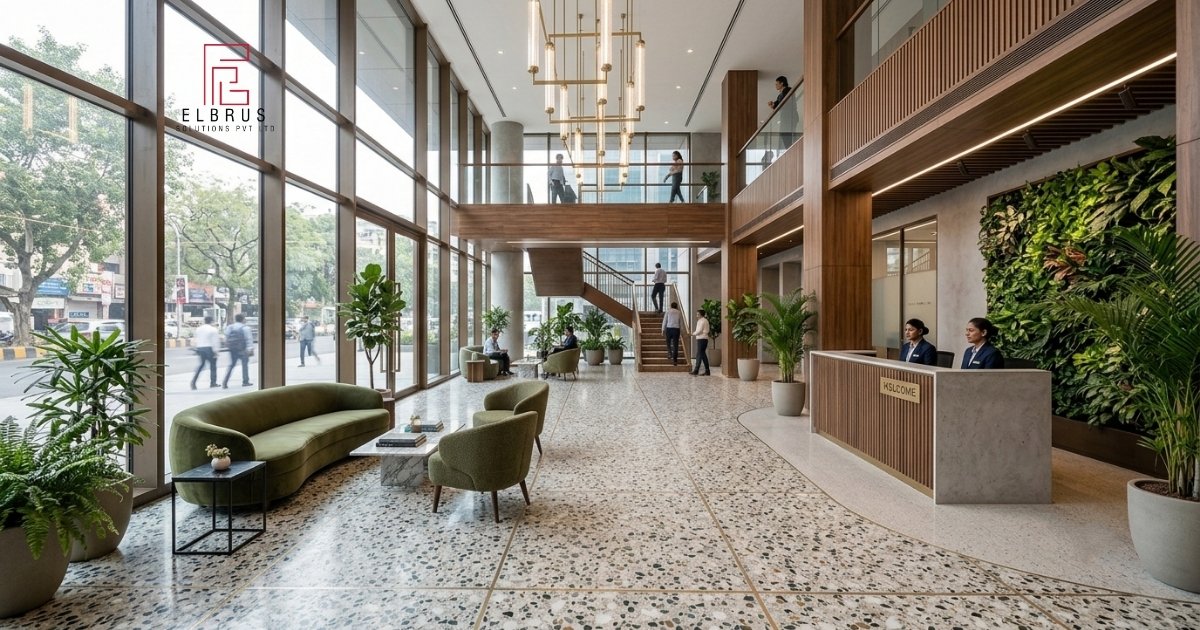
Commercial floors are exposed to significantly more daily activity than many residential floors. Office entrances, hotel lobbies, retail stores, corporate corridors, restaurants, and public areas can experience thousands of footsteps over time.
Durability therefore becomes a major design consideration. Terrazzo has a long-standing reputation for resilience, particularly when properly installed, finished, and maintained. Elbrus Solutions specifically describes terrazzo as an architectural product often specified for high-traffic areas in commercial and public buildings.
This makes terrazzo flooring for commercial spaces particularly suitable for projects where the surface must combine visual quality with everyday performance.
2. Design Freedom Without Sacrificing Function
Commercial interiors are increasingly designed around brand identity and memorable visual details. Flooring is no longer simply a background element; it can become part of the architectural language of the space.
Terrazzo allows architects to create different visual directions through aggregate selection, base colours, textures, patterns, and finishes. Neutral terrazzo can support minimalist offices, while larger aggregates and stronger colour combinations can create a distinctive retail or hospitality statement.
Elbrus Solutions works with different colours and textures in terrazzo and offers customisable architectural products, making it possible to coordinate flooring with walls, staircases, furniture, countertops, and other surfaces.
3. A Premium Look for Corporate and Hospitality Interiors
First impressions matter in commercial architecture.
A reception area, hotel lobby, showroom, boutique, or corporate headquarters needs materials that communicate quality from the moment visitors enter. Polished terrazzo can provide a refined surface with a distinctive aggregate pattern, helping large spaces feel cohesive and thoughtfully designed.
Because every terrazzo composition can have its own combination of aggregates and colours, architects can create surfaces that feel specific to a project instead of relying on repetitive, generic finishes.
This design flexibility is one reason terrazzo flooring for commercial spaces works particularly well in premium offices, hotels, restaurants, retail outlets, and public-facing environments.
4. Easy Maintenance for Busy Properties
Commercial spaces need flooring that can be maintained efficiently. Frequent cleaning is unavoidable, particularly in areas with high pedestrian movement.
When correctly specified, finished, and sealed, terrazzo provides a smooth, durable surface that can be cleaned as part of a regular maintenance programme. Elbrus Solutions notes that properly sealed terrazzo is resistant to water and stain damage and highlights its durable surface characteristics.
For facility managers, this can be an important advantage because flooring decisions affect operational costs as well as visual appearance.
The specific maintenance requirements will depend on the terrazzo system, finish, location, traffic level, and sealing specification, so architects should always select the finish according to the intended application.
5. Different Finishes for Different Commercial Requirements
Not every commercial space requires the same surface treatment.
A luxury hotel lobby may benefit from a polished finish that reflects light and creates a sophisticated appearance. A busy corridor or high-footfall environment may call for a honed, matte, or textured finish depending on the design and performance requirements.
Elbrus Solutions’ guidance on terrazzo finishes notes that finish selection can influence visual appearance, reflectivity, maintenance, and suitability for different traffic conditions.
This makes terrazzo particularly useful for architects who need to tailor a flooring specification rather than use one standard finish throughout a project.
6. Sustainability Is Becoming More Important
Sustainable material selection is increasingly relevant to contemporary architecture.
Terrazzo can incorporate a variety of aggregates, including marble, quartz, granite, glass, and recycled materials depending on the formulation. Elbrus Solutions also states that its terrazzo production focuses on environmentally friendly materials and describes its green terrazzo system as free from harmful chemicals.
From an architectural perspective, this provides an opportunity to combine visual performance with material-conscious design.
However, sustainability should always be evaluated according to the complete product system, manufacturing process, binder technology, sourcing, installation method, and project requirements rather than based on the word “terrazzo” alone.
7. Visual Continuity Across the Interior
One of terrazzo’s biggest architectural strengths is that its aesthetic can extend beyond the floor.
Elbrus Solutions offers a range of complementary terrazzo and concrete applications, including wall panels, stair treads, table tops, vanities, basins, furniture, lighting, and other pieces.
This opens the door to coordinated interiors where the same material language appears across several architectural elements.
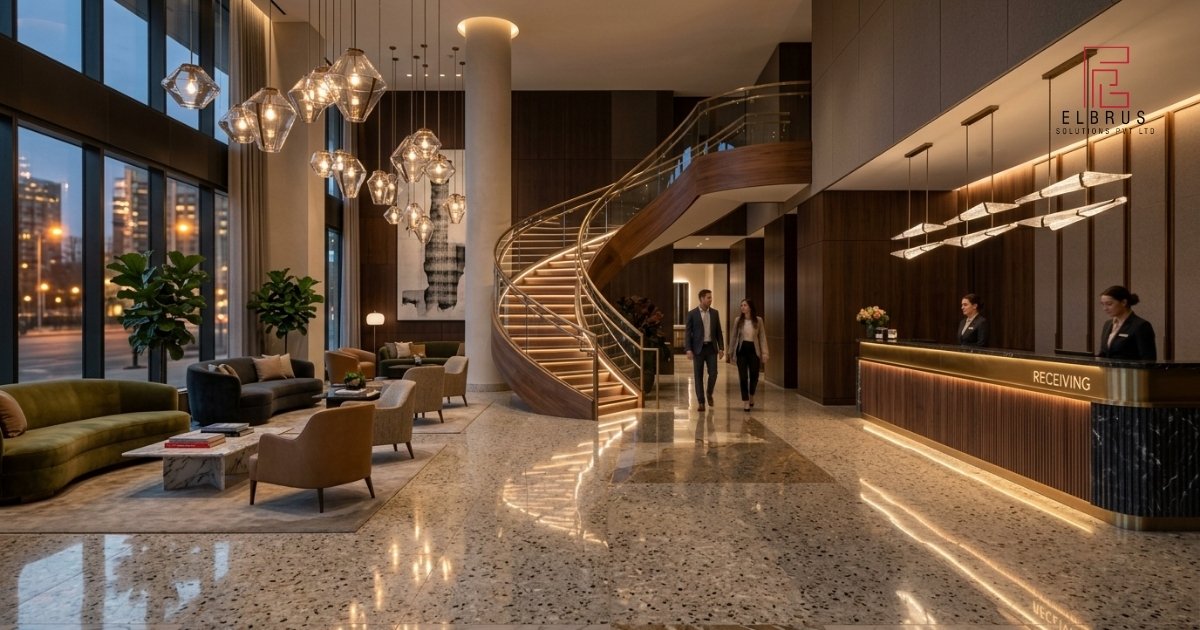
For example, an architect could pair terrazzo flooring with a matching stair tread, reception desk surface, wall feature, or custom furniture element. The result can be a more unified commercial environment.
8. Suitable for Multiple Types of Commercial Spaces
The versatility of terrazzo makes it relevant across a wide range of projects.
Corporate Offices
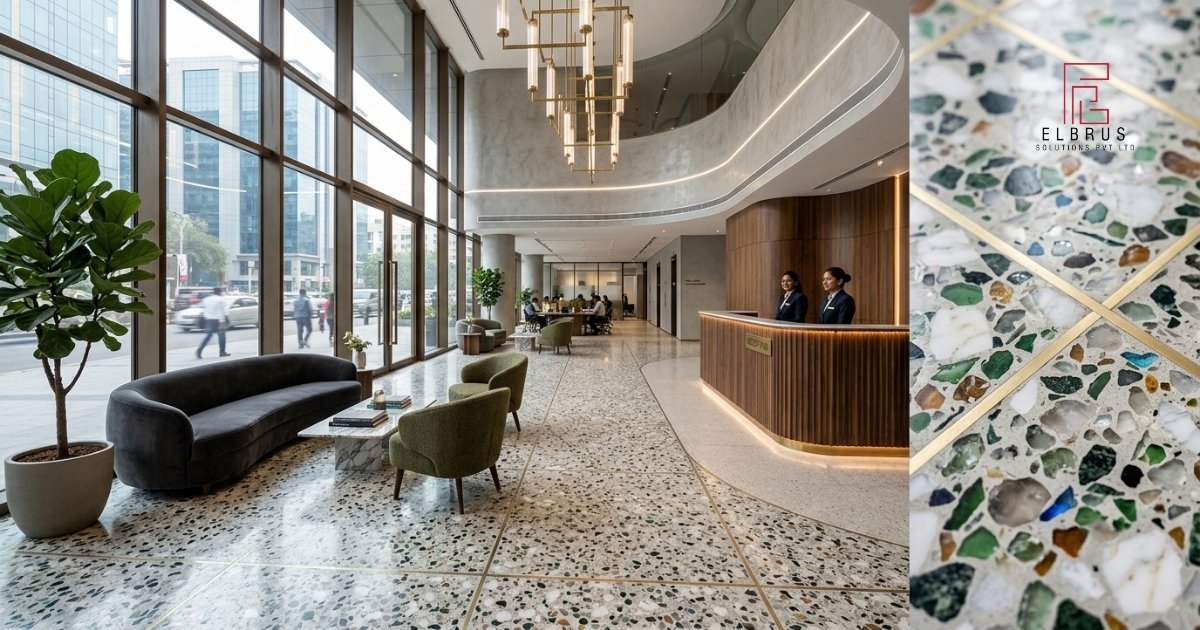
Terrazzo can create a polished, professional appearance in reception areas, meeting zones, corridors, and collaborative spaces while offering the durability required for daily employee and visitor movement.
Retail Stores and Showrooms
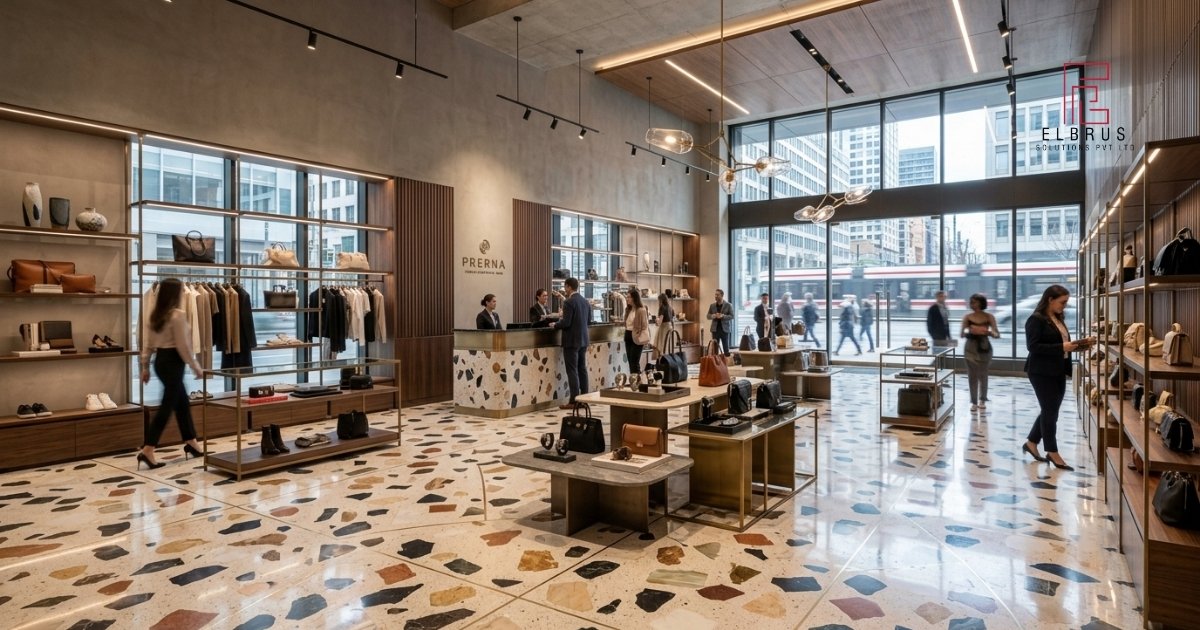
Retail environments rely heavily on visual presentation. Custom terrazzo patterns and colours can complement brand identity, display areas, and premium product zones.
Hotels and Hospitality
Hotel lobbies, corridors, restaurants, and selected public areas can benefit from terrazzo’s combination of durability and decorative character.
Restaurants and Cafés
Where flooring is exposed to continuous movement and regular cleaning, terrazzo can provide an architectural surface that supports both function and visual identity.
Institutional and Public Buildings
Terrazzo is also associated with high-use commercial and public environments where durability and long-term performance are important considerations.
9. Long-Term Value Instead of Short-Term Appearance
Architectural materials should be evaluated over the full life of a project, not simply by their initial appearance.
Terrazzo’s durability, customisation potential, and maintenance characteristics can make it an attractive long-term flooring specification. Elbrus Solutions’ existing research notes that terrazzo can offer long service life and strong performance in high-traffic environments when appropriately installed and maintained.
For commercial property owners, this long-term perspective matters. A floor that continues to support the appearance and function of a property over many years may offer greater value than a material selected solely for its initial price.
How Architects Can Choose the Right Terrazzo for a Project
Choosing terrazzo should begin with the requirements of the space rather than colour alone.
Architects and designers should evaluate:
- Expected foot traffic and usage intensity
- Indoor or outdoor application
- Slip-resistance requirements
- Desired level of gloss and reflectivity
- Aggregate size, colour, and composition
- Maintenance expectations
- Overall interior colour palette
- Installation requirements and project programme
- Sustainability objectives
- Coordination with walls, stairs, furniture, and other surfaces
Finish selection is particularly important. Elbrus Solutions recommends considering foot traffic, slip resistance, and lighting when choosing a terrazzo finish.
Why Elbrus Solutions?
For architects and designers, choosing the right terrazzo partner is just as important as selecting the material itself.
Elbrus Solutions offers a broad terrazzo and concrete portfolio that includes floors, wall panels, stair treads, table tops, outdoor furniture, vanities, basins, bathtubs, lighting, and decorative architectural pieces. The company also highlights customisation, sustainability, and quality as important parts of its approach.
Its product range can help design teams develop a consistent material palette across different parts of a commercial project instead of sourcing every terrazzo element separately.
Final Thoughts
Architecture today requires materials that can perform on multiple levels. A commercial floor must be durable enough for everyday use, visually strong enough to support the design concept, practical enough to maintain, and flexible enough to work with evolving architectural styles.
That is why terrazzo flooring for commercial spaces continues to attract architects and interior designers. Its combination of durability, design freedom, finish options, sustainability considerations, and long-term visual appeal gives it a strong position in contemporary commercial architecture.
From corporate offices and retail stores to hotels, restaurants, and public buildings, terrazzo can do much more than cover a floor. With the right specification and craftsmanship, it can become an integral part of the architectural identity of the entire space.
For architects, builders, and interior designers looking for customised terrazzo solutions, Elbrus Solutions offers a wide range of products and architectural applications designed to bring performance and distinctive material character together.
Ready to specify terrazzo for your next commercial project? Connect with Elbrus Solutions for terrazzo flooring, architectural surfaces, custom solutions, and project requirements.
Website: elbrussolutions.in
Contact: +91 9266-77-7105 | +91 9958-22-1327 | +91 9911-15-0743