

Choosing the right flooring material is an important decision when building a new home, renovating an apartment, or designing a commercial space. Flooring influences the overall appearance of an interior, its maintenance requirements, durability, and long-term value. Among the many options available, terrazzo, marble, and granite remain popular choices for homeowners, architects, and interior designers.
However, each material offers different benefits. Marble is appreciated for its natural veining and luxurious appearance, granite is known for its hardness and strength, and terrazzo offers extensive design flexibility through its combination of decorative aggregates and binding materials.
If you are comparing Terrazzo Flooring vs Marble vs Granite, understanding their differences can help you select a surface that matches your budget, design preferences, and everyday requirements.
In this guide, Elbrus Solutions compares these three flooring materials based on composition, durability, maintenance, appearance, sustainability, and suitability for different spaces.
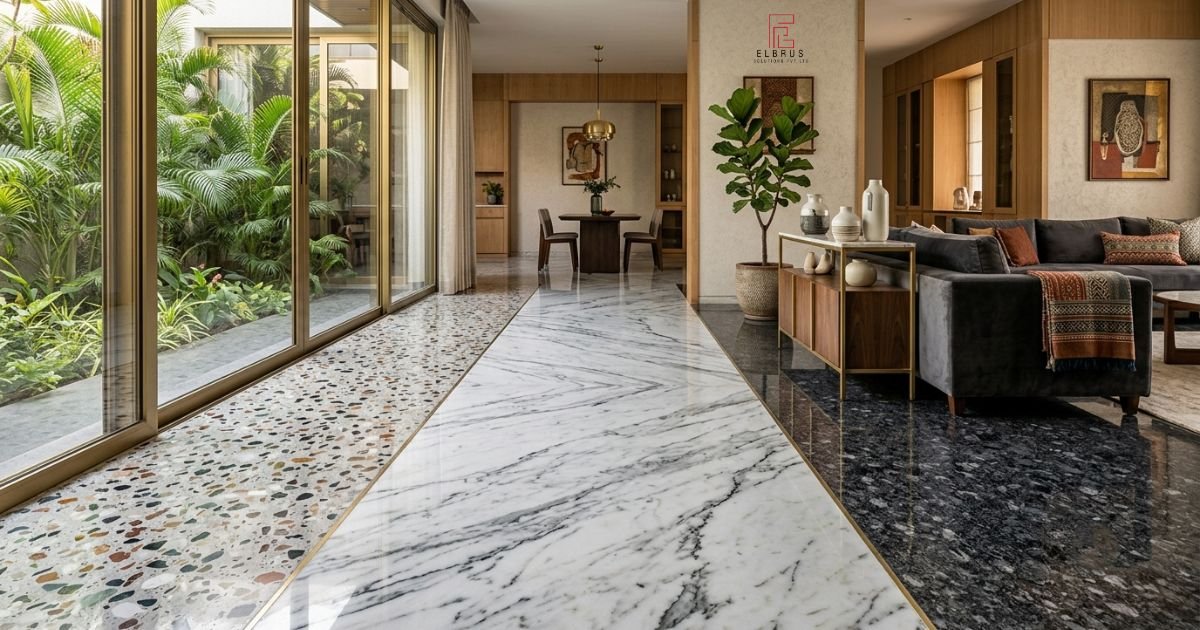
1. What Is Terrazzo Flooring?
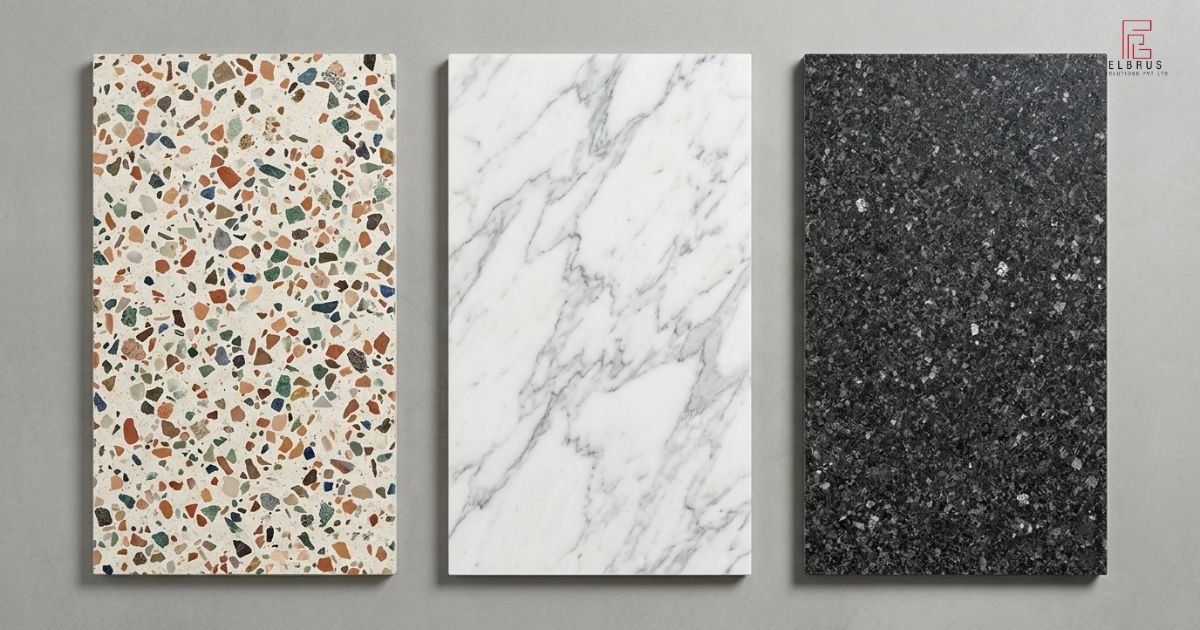
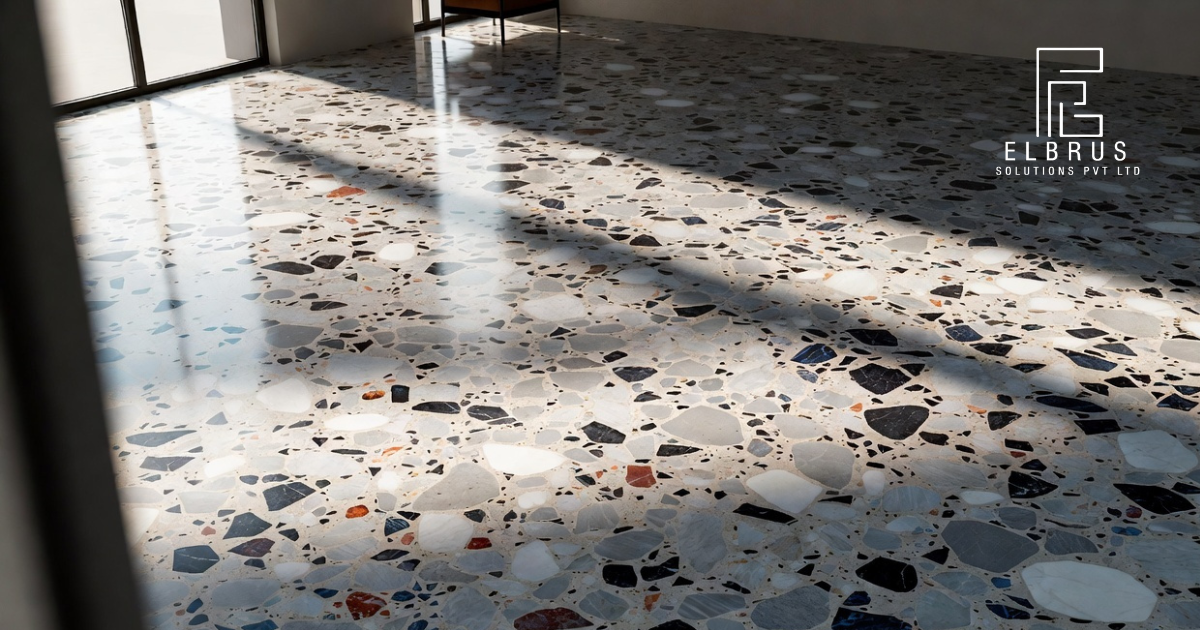
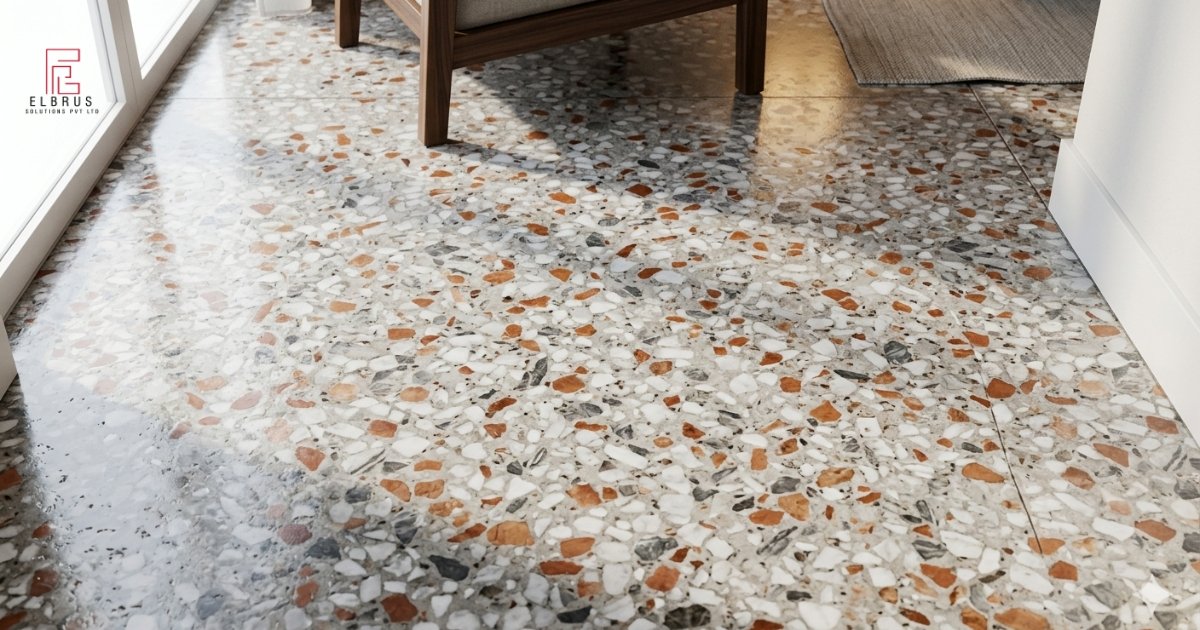
Terrazzo is a composite surface created by embedding decorative aggregates, such as marble chips, granite, quartz, or glass, into a cement-based or resin-based binder. The material is then cured and, depending on the system, ground and polished to achieve the desired finish.
Unlike natural stone slabs, terrazzo allows designers to control the appearance of the finished surface by selecting different aggregate sizes, colours, combinations, and patterns.
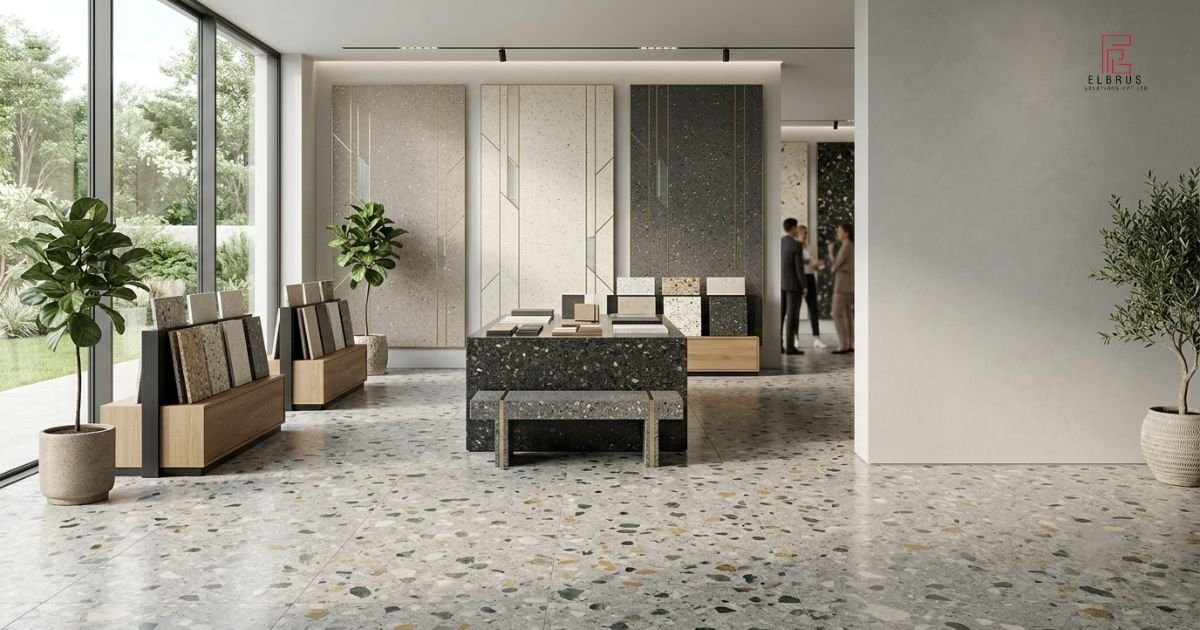
Modern terrazzo is widely used in residential interiors, commercial buildings, hotels, retail spaces, offices, and architectural projects. Its versatility also makes it suitable for applications beyond flooring, including wall panels, stair treads, tabletops, vanities, and washbasins.
Benefits of Terrazzo Flooring
1. Extensive design flexibility
Terrazzo can be manufactured in a wide range of colours, textures, and aggregate combinations. From subtle neutral surfaces to bold decorative patterns, it can complement contemporary, minimalist, and traditional interiors.
2. Long-term durability
When correctly specified, installed, and maintained, terrazzo can withstand substantial foot traffic. Its performance depends on the binder, aggregate selection, thickness, installation quality, and maintenance routine.
3. Practical maintenance
Regular sweeping and damp mopping with a suitable pH-neutral cleaner help keep terrazzo clean. Depending on the finish and formulation, periodic sealing or professional refinishing may be required.
4. Potential sustainability benefits
Terrazzo formulations can incorporate recycled glass, reclaimed stone, and other suitable secondary materials. The actual environmental impact depends on the ingredients, manufacturing process, transport, and expected service life.
5. Multiple architectural applications
Terrazzo can create a consistent design language across floors, staircases, wall panels, furniture, and decorative surfaces.
Potential Limitations
Terrazzo may require skilled installation, careful substrate preparation, and adequate curing time, particularly for poured-in-place systems. Premium custom designs can also involve a higher initial investment than some standard flooring products.
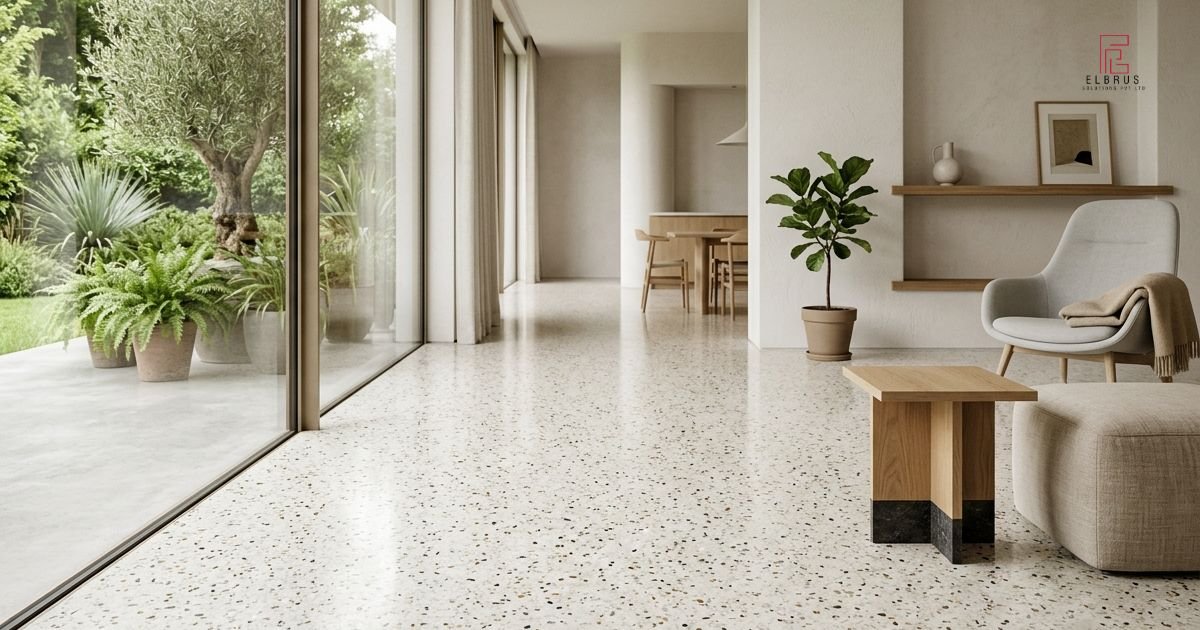
2. What Is Marble Flooring?
Marble is a natural stone formed when limestone or dolostone undergoes metamorphism under heat and pressure. Its distinctive veining, colour variations, and crystalline appearance make it a sought-after material for premium residential and commercial interiors.
Marble flooring is frequently used in living rooms, bedrooms, hotel lobbies, entrance areas, and other spaces where natural stone aesthetics are a priority.
Benefits of Marble Flooring
1. Natural visual appeal
Every marble slab has its own veining and mineral patterns. This variation creates a distinctive appearance that cannot be perfectly replicated from one piece to another.
2. Premium interior finish
Polished marble reflects light and can help create a bright, spacious impression in well-designed interiors.
3. Variety of colours
Marble is available in white, beige, cream, green, grey, and other shades, depending on the variety and source.
4. Professional restoration possibilities
Worn marble floors can often be professionally honed and repolished, depending on their thickness, condition, and installation.
Potential Limitations
Marble is generally more susceptible to scratching and acid etching than granite. Substances such as lemon juice, vinegar, and certain household cleaners can dull its surface. Some varieties also require sealing to help manage staining.
Regular cleaning with stone-compatible products and prompt removal of spills are important for maintaining its appearance.
Marble can be a strong choice for homeowners who prioritise natural patterns and a classic finish, provided they are comfortable with its care requirements.
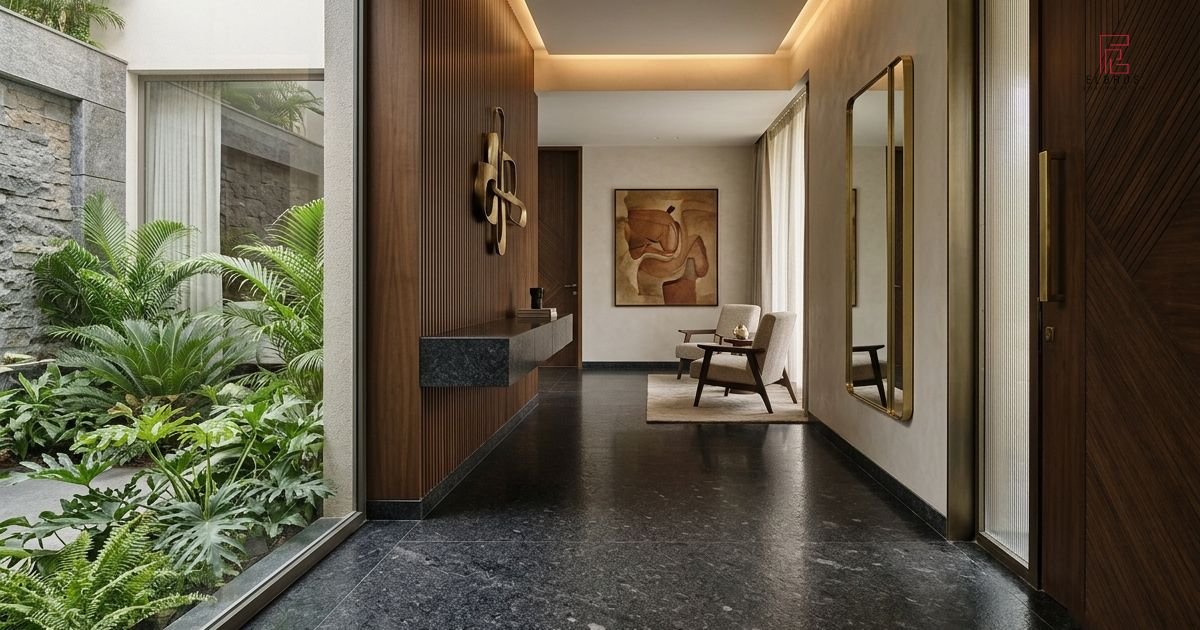
3. What Is Granite Flooring?
Granite is a natural igneous rock composed primarily of minerals such as quartz and feldspar, along with other minerals that contribute to its colour and texture. It is widely used in residential and commercial construction because of its hardness and resistance to everyday wear.
Granite flooring is commonly selected for entrances, corridors, staircases, kitchens, and other areas that require a robust surface.
Benefits of Granite Flooring
1. High hardness
Many granite varieties offer strong resistance to abrasion and everyday scratching, making them suitable for busy areas.
2. Good stain resistance when properly maintained
Granite generally performs well against many common household stains, although its porosity varies. Certain varieties benefit from sealing.
3. Distinctive natural patterns
Granite features mineral grains, speckles, and colour variations that create a different visual effect from marble’s characteristic veining.
4. Suitable for high-use spaces
With the right finish, installation, and maintenance, granite can perform well in residential and commercial settings that experience frequent foot traffic.
Potential Limitations
Granite offers less control over the final pattern than custom-designed terrazzo because its appearance is determined by natural geological formations. Some granite finishes can also become slippery when wet, and hard surfaces may feel uncomfortable during prolonged standing.
Like other natural stones, granite requires suitable cleaning products and installation practices to maintain its performance.
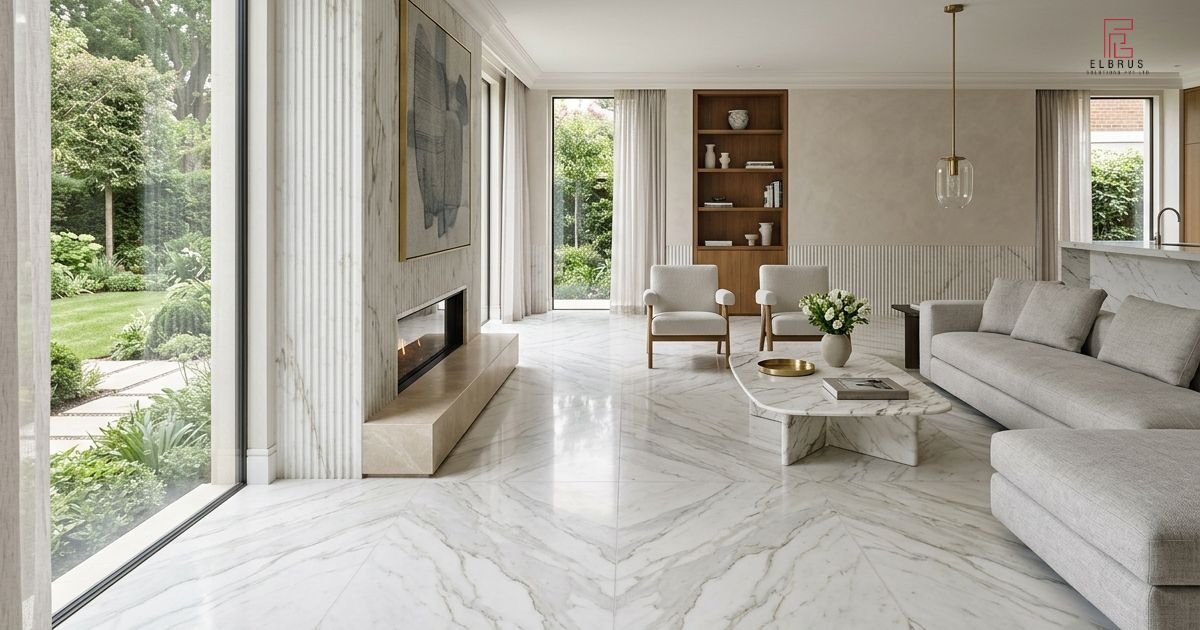
4. Terrazzo Flooring vs Marble vs Granite: Key Differences
The best flooring material depends on what matters most to your project. Compare the following characteristics before making a decision.
| Comparison Factor | Terrazzo | Marble | Granite |
|---|---|---|---|
| Material type | Composite surface | Natural metamorphic stone | Natural igneous stone |
| Appearance | Customisable aggregate patterns | Distinctive natural veining | Natural mineral grains and speckles |
| Design flexibility | Very high | Determined by available stone | Determined by available stone |
| Durability | High with correct specification and installation | Good, but more susceptible to scratching and etching | Generally very high abrasion resistance |
| Maintenance | Regular cleaning; sealing depends on system | Careful cleaning and possible sealing | Regular cleaning and possible sealing |
| Stain resistance | Depends on binder, finish, and sealing | Varies; acidic spills can etch the surface | Generally good, but varies by stone |
| Installation | Tiles or specialist poured systems | Stone cutting and laying | Stone cutting and laying |
| Sustainability potential | Can incorporate recycled aggregates | Depends on quarrying, processing, and transport | Depends on quarrying, processing, and transport |
| Typical design preference | Contemporary, decorative, and customised spaces | Classic and luxurious interiors | Durable, practical, and natural-stone interiors |
Important: Actual performance varies by product, finish, installation method, and maintenance. No single material is automatically superior in every category.
5. Which Flooring Material Is More Durable?
Durability should be evaluated in terms of abrasion, impact, scratching, staining, repairability, and the conditions in which the floor will be used.
Terrazzo durability
Properly manufactured and installed terrazzo is suitable for many high-traffic environments. Its long-term performance depends on the aggregate composition, binder, substrate preparation, joint detailing, and surface finish.
Marble durability
Marble can remain attractive for many years with appropriate care. However, its relative softness and sensitivity to acidic substances make it more vulnerable to visible wear and surface etching in certain applications.
Granite durability
Granite is generally very hard and offers excellent resistance to abrasion. This makes many varieties suitable for heavily used areas, although the chosen finish, stone quality, and installation remain important.
Which should you choose? Granite is often a practical option where abrasion resistance is a priority. Terrazzo is compelling when durability must be combined with customised design. Marble is suitable when its natural appearance is the primary consideration and the required maintenance is acceptable.
6. Which Flooring Requires Less Maintenance?
Maintenance is not limited to sweeping and mopping. It also includes stain prevention, sealing, repairs, polishing, and the availability of qualified restoration professionals.
Terrazzo maintenance
Clean terrazzo with a soft mop and a pH-neutral cleaner recommended for the specific system. Avoid harsh acidic or abrasive products. Cement-based terrazzo may need periodic sealing, while resin-based products have different care requirements.
Marble maintenance
Marble needs careful handling because acidic substances can damage its polished surface. Clean spills promptly, use stone-compatible products, and follow the supplier’s sealing recommendations.
Granite maintenance
Granite is generally straightforward to clean. Depending on the specific variety and finish, sealing may be recommended to reduce the risk of staining. Avoid assuming that every granite surface is completely stain-proof.
For all three materials, ask the supplier for written cleaning and maintenance instructions before installation.

7. Which Flooring Is More Affordable?
The initial price of flooring depends on the material grade, aggregate or stone selection, thickness, finish, dimensions, transport, installation labour, and the condition of the subfloor.
Terrazzo can range from relatively standard precast products to premium custom installations. Marble prices vary significantly by stone variety and origin, while granite costs depend on its type, thickness, finish, and availability.
For a fair comparison, request an itemised quotation that includes:
- Material and wastage allowances
- Cutting, laying, and installation labour
- Subfloor preparation and levelling
- Adhesives, grout, binders, and sealers
- Polishing and finishing
- Transport and handling
- Expected maintenance and restoration costs
A lower purchase price does not necessarily mean a lower lifetime cost. A durable floor with an appropriate maintenance plan may offer better value over its service life.

8. Which Material Is More Sustainable?
Sustainability is an increasingly important consideration in modern construction. However, a material’s environmental impact cannot be determined by appearance or composition alone.
Terrazzo and resource efficiency
Terrazzo can incorporate recycled glass, reclaimed stone chips, and other suitable recovered aggregates. Its long service life can also reduce the frequency of replacement. The environmental benefits depend on the actual formulation, binder, manufacturing energy, and transport.
Marble and natural resource extraction
Marble is a natural material, but quarrying, cutting, polishing, and transportation require resources and energy. Efficient cutting, responsible sourcing, and long service life can influence its overall environmental footprint.
Granite and long-term use
Granite can provide a long-lasting surface, reducing the need for frequent replacement. Its environmental performance also depends on extraction practices, processing, transport distances, and installation requirements.
When comparing flooring products, ask suppliers about recycled content, material sourcing, manufacturing practices, durability, and maintenance needs. Product-specific environmental documentation is more useful than broad claims that one material is always the most sustainable.
9. Which Flooring Is Best for Different Spaces?
Your room’s purpose should guide the final decision.
Living rooms
Terrazzo offers customised patterns that can coordinate with furniture and architectural details. Marble suits interiors that favour natural veining, while granite provides a durable natural-stone alternative.
Kitchens
Granite is often a practical choice because of its hardness and resistance to everyday wear. Terrazzo can also work well when its formulation is suitable for kitchen use and spills are cleaned promptly. Marble requires additional care around acidic foods and cleaning products.
Bedrooms
Marble suits classic interiors, terrazzo complements contemporary design schemes, and granite works for those who prefer natural stone with a robust finish. Rugs and furnishings can help soften the feel of any hard flooring.
Offices and commercial buildings
Terrazzo is worth considering for reception areas, retail environments, corridors, and other spaces where distinctive design and heavy foot traffic must be balanced. Granite may suit high-use areas, while marble can be specified for premium interiors with an appropriate maintenance plan.
Bathrooms and wet areas
All three materials require careful selection of the surface finish and proper waterproofing. A polished surface can be slippery when wet, so evaluate slip resistance, drainage, and the manufacturer’s recommendations before installation.
Staircases and entrance areas
Granite and appropriately specified terrazzo can be strong options for busy circulation areas. Marble may also be used where its appearance is desired, provided the design accounts for wear, edge detailing, and safe footing.
10. Why Consider Elbrus Solutions for Terrazzo?
At Elbrus Solutions, terrazzo is approached as an architectural material that brings together durability, texture, and creative design possibilities.
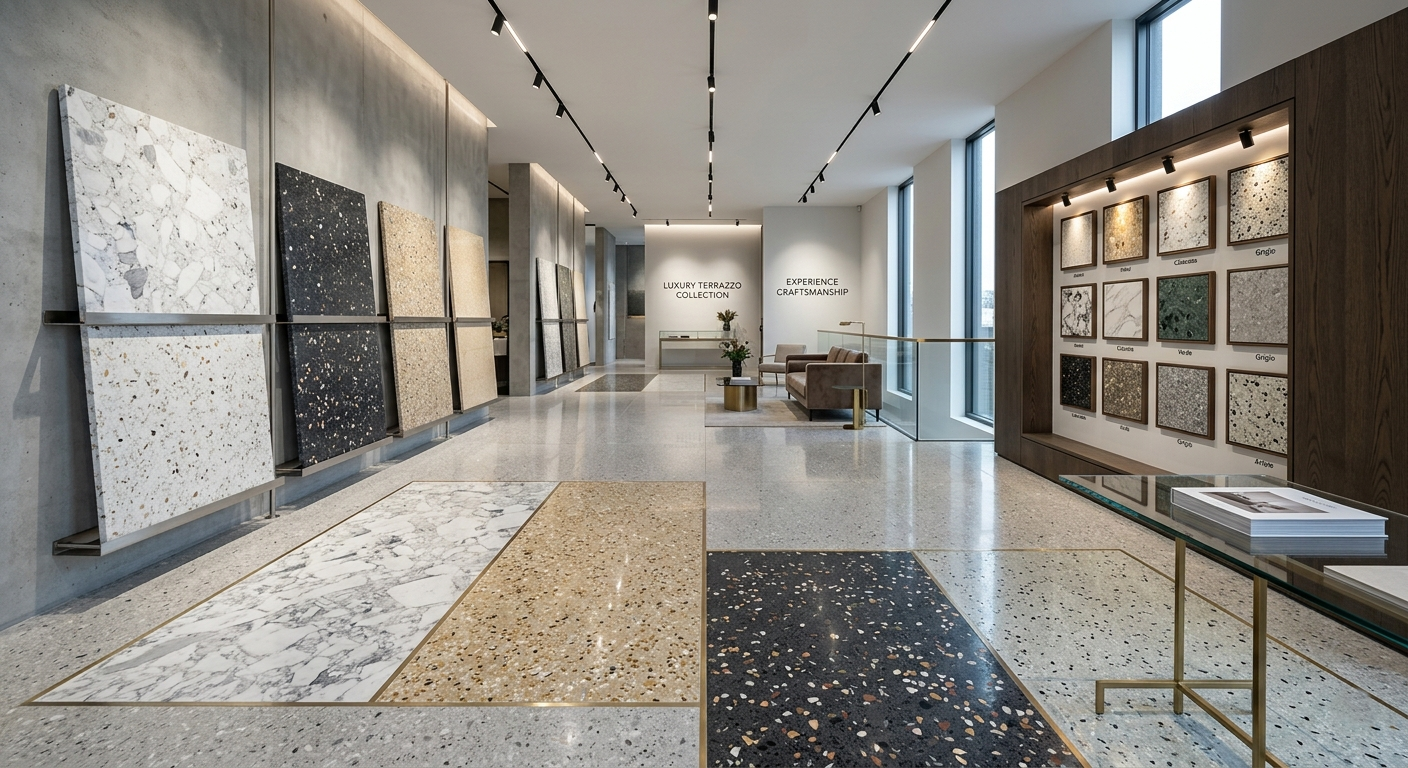
The company’s range includes terrazzo and concrete flooring, wall panels with marble, glass, copper, and brass inlays, stair treads, tabletops, vanities, basins, bathtubs, lighting, and other architectural products.
For residential and commercial projects, customisable terrazzo can help create a coordinated design across multiple surfaces. Designers can explore aggregate combinations, colour palettes, and decorative details to suit the requirements of each space.
Elbrus Solutions also highlights its focus on sustainability and the use of environmentally responsible materials in its production approach.
Before choosing a product, discuss your project’s intended use, traffic levels, preferred finish, installation conditions, cleaning routine, and budget with the supplier. Reviewing physical samples and technical specifications can help you make a more informed decision.
Explore the collection at https://elbrussolutions.in/.
Conclusion: Which Flooring Should You Choose?
The right flooring material is the one that meets your practical requirements while complementing the design of your space.
Marble is a strong option for people who appreciate natural veining and a classic premium appearance. Granite is often well suited to busy spaces where hardness and abrasion resistance are priorities. Terrazzo stands out for its design flexibility, decorative aggregates, and potential to create a consistent architectural finish across floors and other surfaces.
Ultimately, the choice between Terrazzo Flooring vs Marble vs Granite depends on your design goals, installation budget, maintenance expectations, and the conditions in which the flooring will be used.
If you are planning a residential or commercial project, explore the terrazzo collection from Elbrus Solutions and compare available finishes, materials, and specifications before finalising your flooring.
Contact Elbrus Solutions
Website: https://elbrussolutions.in/
Email: elbrussolutionspvt@gmail.com
Phone: +91 9266-77-7105 | +91 9958-22-1327 | +91 9911-15-0743
Choose a flooring solution that balances lasting performance with the character you want your space to express.