

Sustainable terrazzo design is becoming an important consideration for architects and interior designers looking for materials that combine resource efficiency, durability, maintenance practicality, and creative freedom.
Terrazzo is a composite surface made by embedding aggregates such as marble, glass, granite, and other suitable materials within a cementitious or resin-based binder. After installation or casting, the surface is ground and finished to create a durable architectural surface. Industry guidance from the National Terrazzo & Mosaic Association identifies recycled glass and other recycled aggregates among the materials that can be incorporated into terrazzo.
Elbrus Solutions also places sustainability at the center of its terrazzo offering, stating that it uses environmentally friendly materials and a green terrazzo system free from harmful chemicals. The company works across terrazzo and concrete floors, wall panels, stair treads, table tops, furniture, vanities, basins, bathtubs, lighting, and other architectural products.
Sustainable terrazzo design is therefore about more than creating a visually interesting surface. It involves thinking about where materials come from, how long they remain useful, how they are maintained, and how intelligently they can be used within a building.
1. Terrazzo Can Give Recovered Materials a New Role
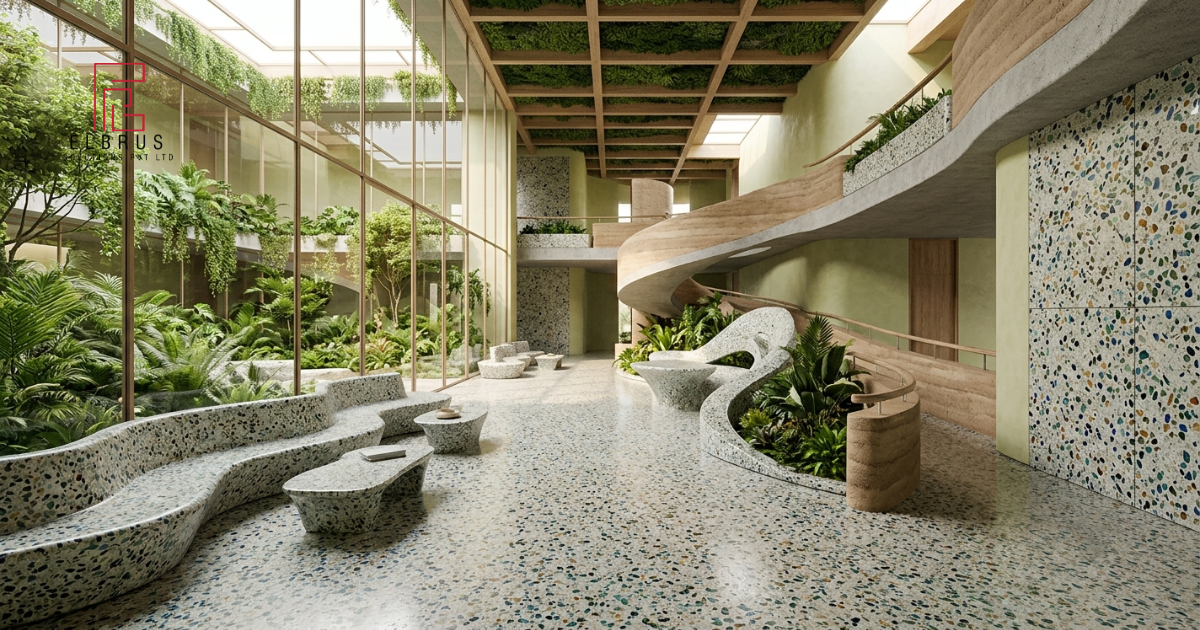
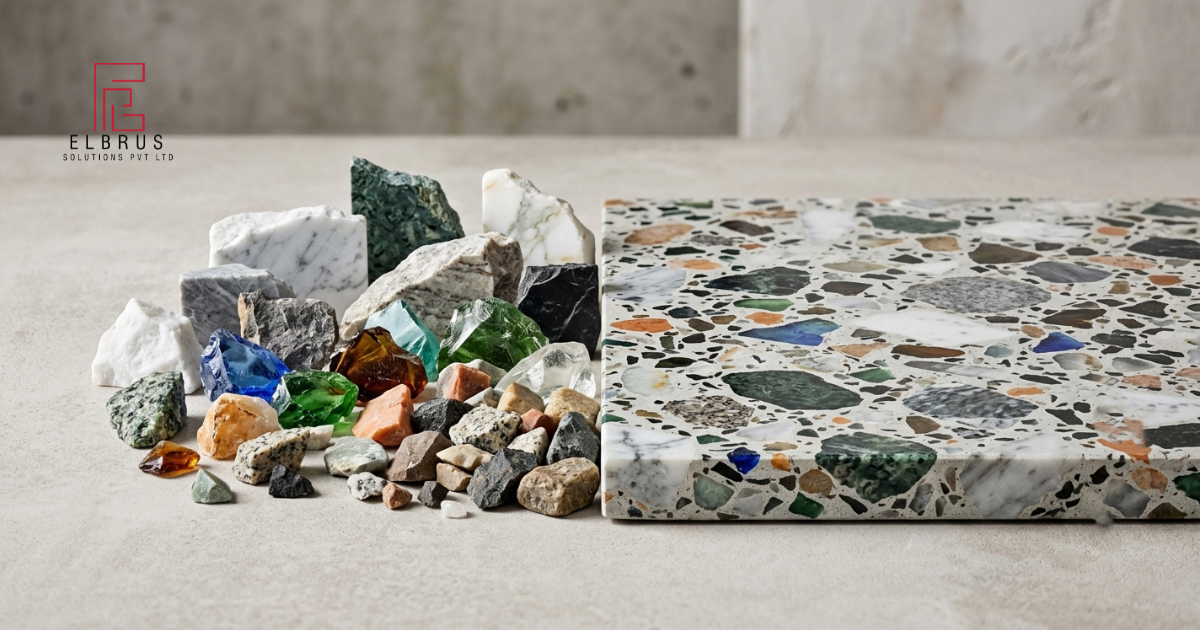
One of terrazzo’s defining characteristics is its aggregate-rich composition. Materials that might otherwise become processing waste can become part of the finished surface.
The history of terrazzo itself is closely connected with reuse. The National Terrazzo & Mosaic Association describes its origins in Italy, where marble remnants were used to create practical flooring. Modern terrazzo continues this principle through materials such as recycled glass and reclaimed or recovered aggregates, depending on the formulation.
This approach fits well with the principles of circular design. Instead of treating every fragment as waste, designers can consider whether it can become a useful aggregate within a new material system.
For sustainability-focused projects, however, it is important to ask specific questions. What percentage of the aggregate is recycled? Where was it sourced? What type of binder is being used? Is supporting documentation available?
These details help distinguish a genuinely considered material specification from a broad sustainability claim.
2. Durability Can Reduce Replacement and Waste
A sustainable building needs materials that perform over time.
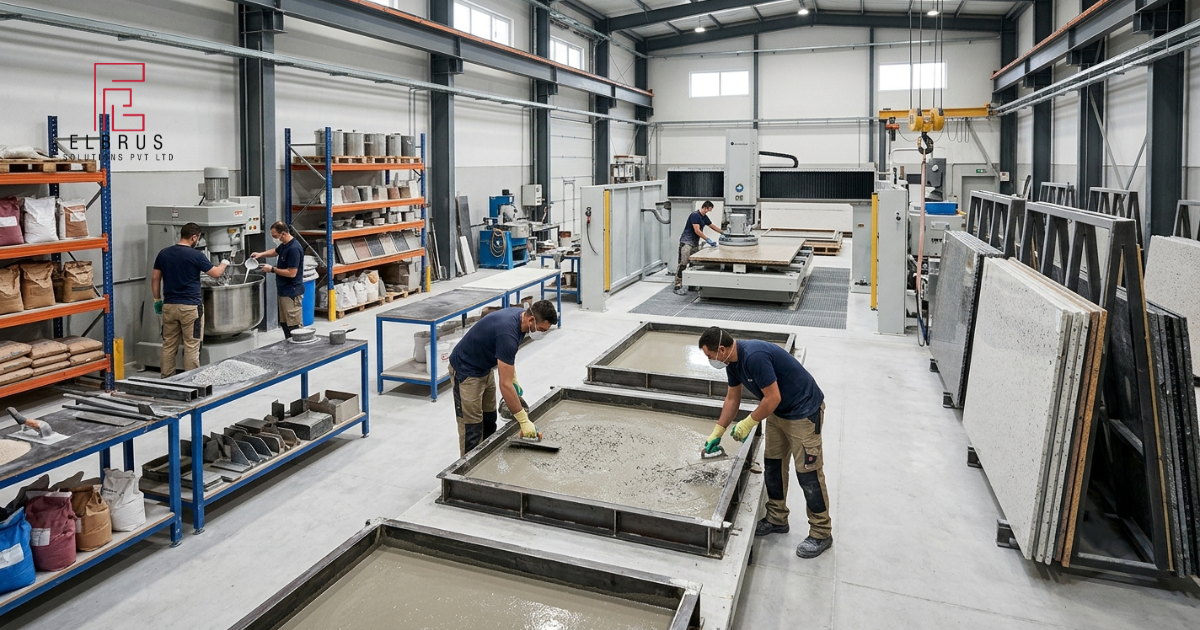
The longer a surface remains functional, the less frequently it may need to be removed and replaced. That can reduce the material use, installation work, transportation, and waste associated with repeated replacement.
The National Terrazzo & Mosaic Association highlights durability and long service life as important sustainability characteristics of terrazzo. Its sustainability guidance also notes that durable construction can reduce the environmental impact associated with replacement and that terrazzo surfaces can be preserved when a building is renovated or updated.
This characteristic makes terrazzo suitable for applications where surfaces face regular use, including commercial buildings, public spaces, offices, hospitality environments, and other high-traffic areas. Elbrus Solutions specifically notes that terrazzo is commonly used in high-traffic commercial and public buildings.
Durability does not mean a surface requires no care. Correct installation, suitable sealing or finishing, and appropriate maintenance remain essential.
3. Low-Maintenance Surfaces Support Long-Term Sustainability
Sustainability does not end when construction is complete.
The resources required to clean, maintain, repair, and refinish a surface contribute to its overall life-cycle impact. A material that can be maintained with straightforward routine care can be practical for long-term projects.
The National Terrazzo & Mosaic Association characterizes terrazzo as a low-maintenance material and notes that routine maintenance can be carried out using environmentally friendly products and energy-efficient methods. Actual care requirements depend on the terrazzo system, finish, location, and manufacturer’s recommendations.
For architects and property owners, this makes maintenance planning an important part of material selection. The right question is not simply, “Does this material look good today?” but also, “How will this surface perform and be maintained over many years?”
4. One Material Can Support Multiple Architectural Applications
One of the strongest arguments for sustainable terrazzo design is its versatility.
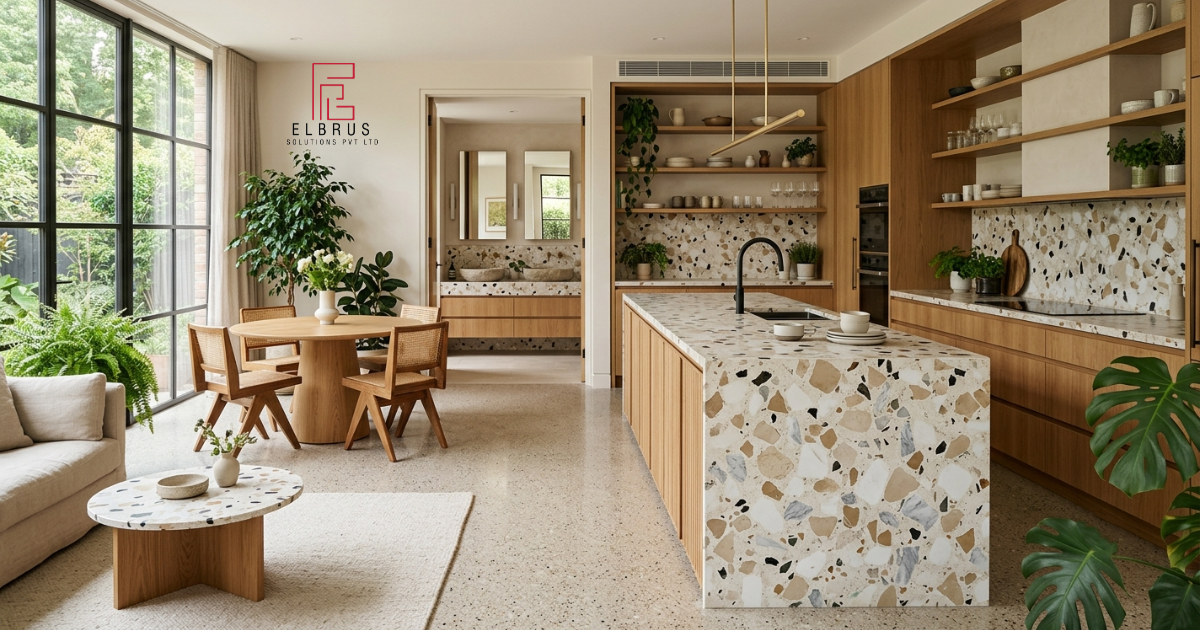
Terrazzo does not have to be limited to a single surface. Elbrus Solutions currently lists terrazzo and concrete floors, wall panels with marble, glass, copper, and brass inlays, stair treads, table tops, outdoor furniture, vanities, basins, bathtubs, lighting, art pieces, breeze blocks, and other products.
This opens up interesting possibilities for material planning.
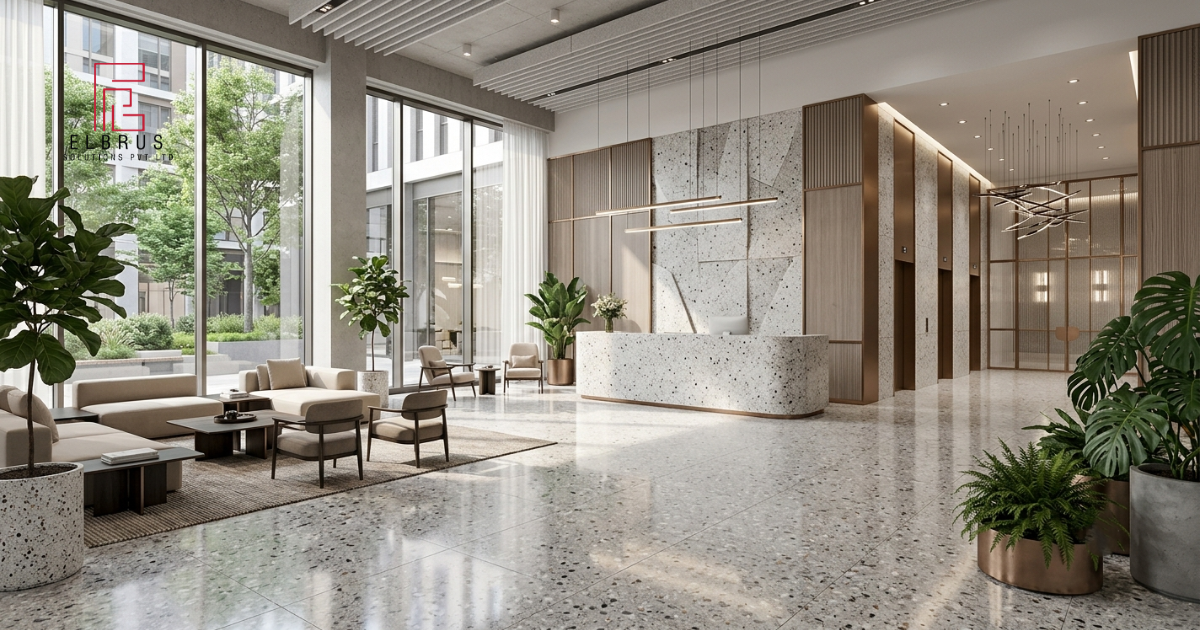
A hotel, for example, could use a coordinated terrazzo palette for its entrance flooring, reception counter, stair elements, bathroom basins, and selected furniture pieces.
A residential project could carry a consistent material language from a kitchen countertop to bathroom surfaces, shelving, furniture, or decorative elements.
Using one material family across several applications can help create visual continuity while giving architects greater control over the project’s material palette.
5. Recycled Glass Makes Sustainability Visible
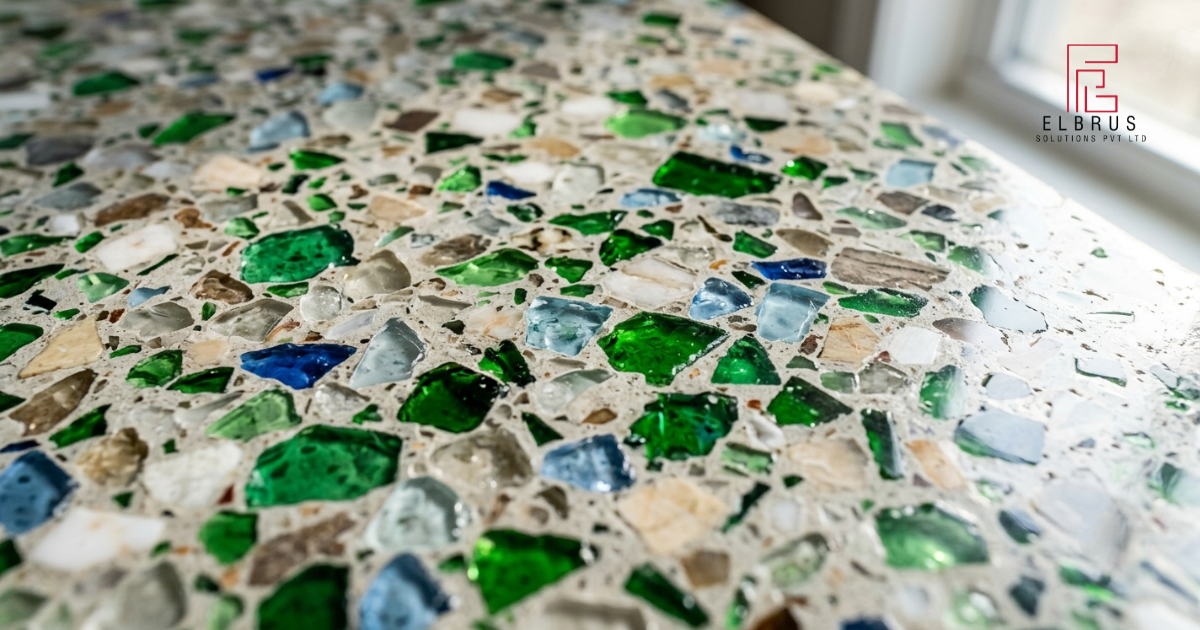
Glass is particularly interesting as a terrazzo aggregate because of its ability to introduce color, reflection, texture, and visual depth.
The National Terrazzo & Mosaic Association lists pre-consumer and post-consumer recycled glass among the aggregate options that can be used in terrazzo systems.
For designers, this means sustainability can become part of the visual identity of a project rather than remaining hidden inside a technical specification.
A terrazzo surface with recycled glass chips can create subtle mineral patterns, stronger color contrasts, or carefully coordinated decorative compositions.
The concept is simple: a recovered material gets another useful life while becoming part of the architectural character of the space.
6. Customization Can Help Materials Stay Relevant Longer
Sustainable terrazzo design also benefits from terrazzo’s ability to be customized.
Designers can work with different aggregate types, sizes, colors, pigments, patterns, and inlays to create surfaces suited to a project’s architectural language. Elbrus Solutions highlights experimentation with different colors and textures, as well as marble, glass, copper, and brass inlays.
This flexibility has a sustainability advantage that is easy to overlook.
A highly customized surface can be designed around the identity and functional requirements of the project rather than chosen only because it happens to be available. A thoughtful, long-term material palette may also remain appropriate as interiors evolve.
Timeless design does not necessarily mean traditional design. It can mean creating materials with enough character and adaptability to remain valuable over time.
7. Local and Responsible Specification Matters
Terrazzo should not automatically be considered sustainable simply because it contains stone or recycled aggregate.
The environmental profile of a surface depends on multiple factors, including aggregate sourcing, binder composition, manufacturing, transportation, installation, maintenance, and service life.
For a sustainability-focused specification, architects and project teams can ask suppliers for material information, investigate recycled content where relevant, consider suitable locally sourced aggregates, review available environmental documentation, and select a system appropriate for the actual conditions of use.
The National Terrazzo & Mosaic Association notes that terrazzo may support sustainability strategies related to durability, resource efficiency, recycled content, environmental product documentation, low-emitting materials, and green maintenance. However, eligibility for a particular green-building credit depends on the exact product, documentation, project, and rating system.
That makes responsible specification more important than using sustainability language alone.
How Elbrus Solutions Fits Into Sustainable Material Planning
Elbrus Solutions focuses on Best Terrazzo Supplier in India, with terrazzo and concrete products designed around different colors, textures, aggregates, and architectural applications. Its current website highlights environmentally friendly materials and a green terrazzo system free from harmful chemicals.
Its product range extends beyond flooring to wall panels, stair treads, table tops, outdoor furniture, vanities, basins, bathtubs, lighting, breeze blocks, and decorative pieces.
This makes terrazzo relevant as a broader architectural material rather than simply a floor finish.
For architects, interior designers, builders, and homeowners, that approach can help connect durability, material reuse, design customization, and long-term usability within one project strategy.
What Should You Ask Before Choosing Sustainable Terrazzo?
Before specifying terrazzo for a sustainable project, consider these questions:
What recycled content is available?
Ask whether recycled glass, stone remnants, or other recovered aggregates can be incorporated.
What binder system is being used?
The binder influences performance, manufacturing, and environmental characteristics.
Where do the aggregates come from?
Local or responsibly sourced materials may help reduce unnecessary transportation impacts.
How should the finished surface be maintained?
Understand the recommended cleaning, sealing, and care requirements before installation.
What documentation is available?
For projects pursuing green-building goals, request relevant technical and environmental documentation from the supplier.
The Future of Sustainable Design
The future of sustainable architecture will not depend on one material alone. It will depend on better decisions about resource use, durability, maintenance, adaptability, and waste.
Terrazzo brings several of these ideas together in one architectural surface. It can incorporate recycled aggregates, offer long-term performance, support multiple applications, and provide extensive design flexibility.
Sustainable terrazzo design has a meaningful place in this changing approach to architecture because it connects material efficiency with practical performance and design freedom.
When specified carefully and produced responsibly, terrazzo can turn recovered materials and thoughtful craftsmanship into surfaces made for long-term use.
For architects and designers planning the next generation of residential, commercial, hospitality, and institutional spaces, terrazzo offers a compelling way to bring sustainability into the material itself.
FAQs
Is terrazzo a sustainable material?
Terrazzo can be a sustainable material when its composition, sourcing, manufacturing, durability, and maintenance are considered carefully. Recycled glass and other recovered aggregates can be incorporated into suitable systems.
Can terrazzo include recycled materials?
Yes. Depending on the system and manufacturer, terrazzo can include recycled glass, reclaimed stone, porcelain fragments, and other suitable aggregates.
Is terrazzo suitable for commercial spaces?
Terrazzo is widely used for high-traffic environments because of its durability and design flexibility. Elbrus Solutions also highlights commercial and public applications for terrazzo.
Can terrazzo be used beyond flooring?
Yes. Terrazzo can be used for walls, stairs, countertops, tabletops, vanities, basins, bathtubs, furniture, lighting, and decorative architectural elements.
How does terrazzo contribute to long-term sustainability?
Its durability and low-maintenance characteristics can reduce the need for frequent replacement and help extend the useful life of a finished surface.
Website: Elbrus Solutions Website
Instagram: @elbrus_terrazzo on Instagram
Facebook: Elbrus Solutions on Facebook
LinkedIn: Elbrus Solutions on LinkedIn